RFQ Today
Certifications available: EN 10204 3.1 / 3.2 MTRs, NACE MR0175 compliance, Third-Party Inspection, ISO 4762 / DIN 912 / ASME B18.3 standards, and complete EPC export documentation packages.
Socket Cap Screws
A world-class technical reference for EPC contractors, mechanical engineers, hydraulic system designers, procurement heads, TPI inspection agencies, and global project buyers specifying socket cap screws in precision mechanical assemblies, hydraulic manifolds, valve bodies, rotating equipment, tooling, and critical industrial machinery across Oil & Gas, Power Generation, Petrochemical, Aerospace, and Heavy Machinery sectors.
Head Geometry &
Load Characteristics
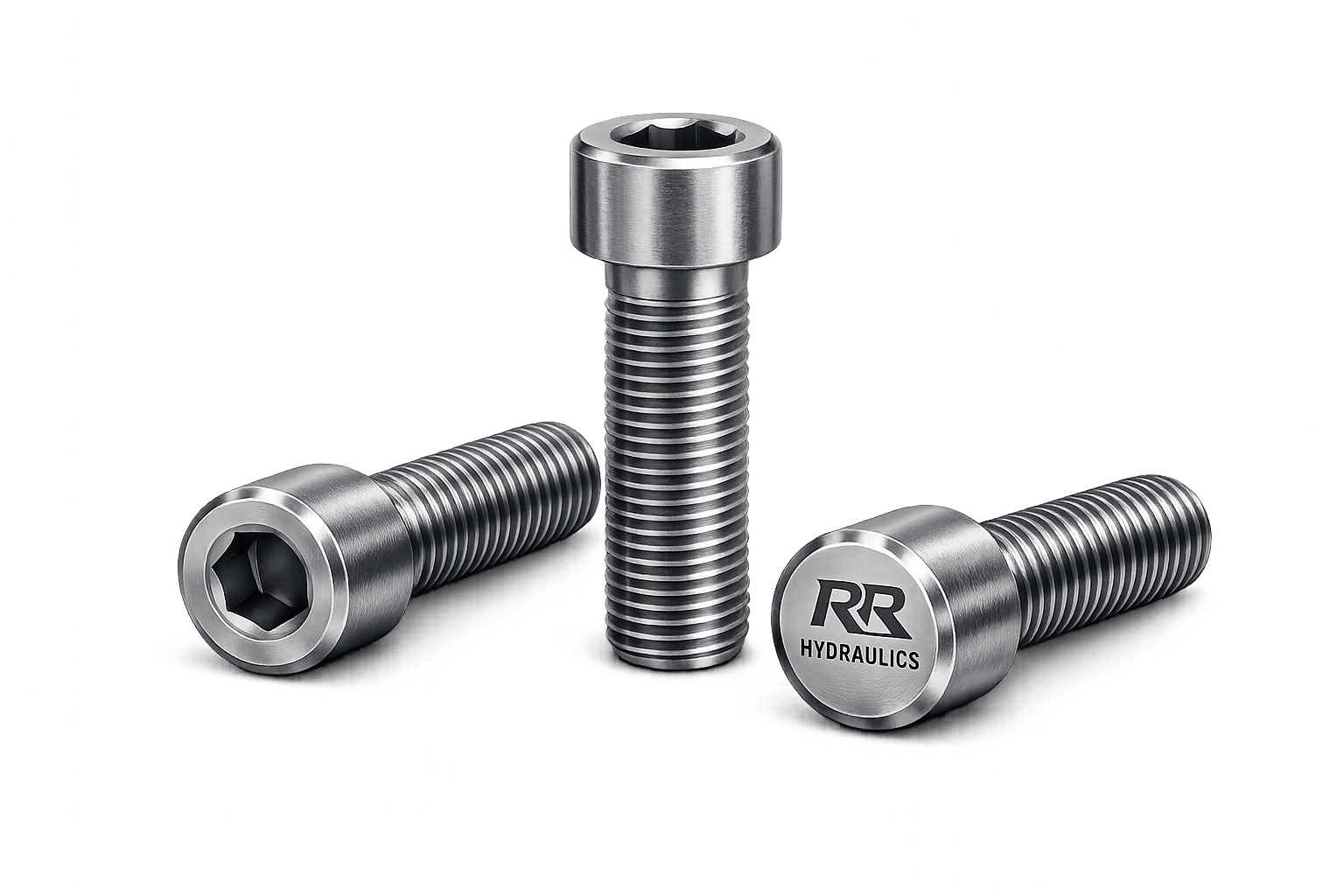
Socket cap screws are high-strength fasteners with a cylindrical head and an internal hexagonal (Allen) drive socket, manufactured to tighter tolerances and higher strength levels than standard hex head bolts. Their compact cylindrical head profile, recessed drive, and high tensile strength make them the preferred fastener in precision mechanical assemblies, hydraulic systems, tooling, and confined-space bolting where hex head bolt clearance is not available.
1.1 — Technical Definition and Functional Role in EPC Systems
A socket cap screw (also termed Allen cap screw, socket head cap screw — SHCS) is a fully or partially threaded fastener with a cylindrical head of precisely defined diameter and height, and a hexagonal socket recess machined into the top face to receive an Allen key (hex key) or bit driver. The head engages a counterbore in the mating component — allowing the screw to be seated flush or below the surface — which is the defining functional advantage over hex head bolts in precision and space-constrained assemblies.
In EPC and industrial environments, socket cap screws are the standard fastener in: hydraulic manifold port closures and sub-plate connections, valve body and actuator assembly, pump and compressor bearing housing covers, gearbox and transmission covers, precision instrument mounting, jig and fixture assembly, linear guide and rail mounting, motor and servo mounting frames, heat exchanger baffle plate fastening, and any application where the bolt head must be recessed below the assembly surface for safety, function, or dimensional clearance reasons.
RR Hydraulic manufactures socket cap screws under all applicable international standards with EN 10204 3.1 / 3.2 material traceability and full project documentation.
1.2 — Socket Cap Screw Type Classification
Socket Head Cap Screw (SHCS)
Cylindrical head with internal hex socket. The standard and most widely used socket screw type. Head diameter ≈ 1.5× nominal thread diameter; head height ≈ 1.0× nominal thread diameter. Per ISO 4762 / DIN 912 (metric) and ASME B18.3 (inch). Grade 12.9 standard; Grade 8.8 and 10.9 also supplied. The primary socket screw in hydraulic, mechanical, and precision engineering.
Countersunk Socket Screw (CSKS / Flat Head)
90° conical head with internal hex socket — sits flush with or below the assembly surface in a countersunk hole. Per ISO 10642 / DIN 7991 (metric) and ASME B18.3 (inch). Used where a flush surface is mandatory: linear guide rails, clamping plates, tooling fixtures, and machine table surfaces. Bearing area is smaller than SHCS — verify bearing stress on soft substrates.
Button Head Socket Screw (BHCS)
Low-profile dome head with internal hex socket. Head diameter ≈ 2.0× nominal; head height ≈ 0.5× nominal — provides the largest bearing area of all socket screw types with the lowest profile. Per ISO 7380-1 / DIN 7380 (metric). Used where maximum bearing area on thin or soft material is required and flush installation is not needed: cover panels, access doors, guards, and enclosures.
Shoulder Bolt (Shoulder Screw / Stripper Bolt)
Precision-ground unthreaded shoulder of defined diameter and length, with a reduced-diameter threaded end. The shoulder provides a precision pivot, guide, or bearing surface. Per ISO 7379 / DIN 9841 (metric) and ASME B18.3 (inch). Used in die and tooling assemblies, cam followers, stripper plate guides, linear bearing mounts, and pivot hinges requiring a precision-ground cylindrical running surface.
Low-Profile Socket Head Screw (LPHCS)
Reduced head height (≈ 0.6× nominal diameter vs 1.0× for standard SHCS) — used where standard SHCS head height exceeds available clearance. Smaller head means reduced socket engagement depth and lower tightening torque capacity vs standard SHCS. Must not substitute standard SHCS where full torque/preload is required without engineering review. Per DIN 6912 (metric).
Socket Set Screw (Grub Screw)
Headless screw with internal hex or Torx socket and various point forms (cup, cone, flat, dog, half-dog). Used to lock shaft-to-hub connections, adjust mechanisms, and secure collars. Per ISO 4026–4029 / DIN 913–916 (metric) and ASME B18.3 (inch). Grade 14.9 / 45H for maximum point hardness in shaft-locking applications. Not a cap screw but supplied in the same hex key fastener family.
1.3 — Socket Cap Screw vs Hex Bolt vs Machine Screw: Engineering Selection
| Parameter | Socket Cap Screw (SHCS) | Hex Head Bolt | Machine Screw | Engineering Implication |
|---|---|---|---|---|
| Head profile | Cylindrical — compact, recessed | Hexagonal — projects above surface | Pan / CSK / cheese — small head | SHCS: flush install; confined space |
| Drive type | Internal hex (Allen) socket | External hex — open/ring wrench | Internal hex / Phillips / Torx | SHCS: no wrench side-clearance needed |
| Standard strength | Grade 12.9 (UTS 1220 MPa) | Grade 8.8 / 10.9 standard | Grade 4.8 / 8.8 standard | SHCS strongest standard offering |
| Thread tolerance | 4g / 6g (tighter than standard) | 6g standard | 6g standard | SHCS: tighter fit for precision assemblies |
| Counterbore installation | Yes — head seats in counterbore | No — head on surface | Yes (CSK) / No (pan head) | SHCS: flush surface possible |
| Side-clearance for drive | Minimal — hex key in axial access | High — wrench swing space needed | Moderate — screwdriver or hex key | SHCS: used in tight envelope designs |
| Preload capacity | Highest — Grade 12.9 standard | High — Grade 10.9 max typical | Moderate — Grade 8.8 typical | SHCS: maximum clamping force for bore |
| Torque input method | Hex key / T-handle / torque wrench | Open/ring/socket wrench | Screwdriver / hex key | SHCS: calibrated torque wrench with hex attachment |
| Primary application | Hydraulic, precision machinery, tooling | Structural, pressure piping flanges | Instrumentation, panels, enclosures | Select per head clearance and strength requirement |
1.4 — Load Characteristics and Failure Modes
Tensile Preload and Clamp Force
Grade 12.9 socket cap screws develop the highest clamp load available from standard fastener grades — proof strength 1100 MPa, UTS 1220 MPa. In hydraulic manifold and valve body applications, this high clamp load is essential to maintain gasketed or metal-to-metal sealing under cyclic hydraulic pressure. Calibrated torque application is mandatory — hand-tightening with a hex key is not acceptable for critical hydraulic joints.
Counterbore Bearing Stress
The cylindrical head bears against a counterbore shoulder in the mating component. Bearing stress under the head = F_clamp / A_head_bearing must not exceed 0.9 × S_y of the counterbore material. For Grade 12.9 screws (high clamp force) in aluminium housings or cast iron covers, bearing stress often governs and requires either a hardened washer insert, a larger counterbore diameter, or a strength-limit on the installed torque.
Socket Drive Engagement and Stripping
The hex socket must have adequate depth for full key engagement. Short socket depth causes key twist-out under high torque — a critical failure mode in Grade 12.9 screws. Minimum socket depth per ISO 4762: 1.0× nominal thread diameter for sizes M3–M10; 0.9×d for M12 and above. Never use a worn or undersized hex key — partial engagement causes socket deformation and loss of drive capability on a prestressed joint.
Hydrogen Embrittlement
Grade 12.9 socket cap screws (hardness 385–435 HV) are at extreme risk of hydrogen embrittlement from zinc electroplating. Delayed brittle fracture occurs 12–72 hours after installation under sustained preload. Post-plating hydrogen embrittlement baking per ASTM F1941 (190°C × 4h minimum) is mandatory for any electroplated Grade 12.9 socket screw. Specify Geomet, PTFE, or plain black oxide coating to eliminate H₂E risk.
Thread Galling (SS Grades)
Stainless steel socket cap screws (A2, A4) are highly susceptible to galling — a welding of the screw thread to the tapped hole thread under the combined heat and pressure of tightening. Galled SS screws cannot be removed without thread damage. Prevention: anti-seize lubricant (nickel-based for SS-to-SS, or PTFE-based for food/pharma) applied to the thread and under the head before installation. Never assemble SS socket screws dry into SS-tapped holes.
Fatigue at Thread Run-Out
The transition between the thread and the unthreaded shank (thread run-out zone) is a stress concentration site where fatigue cracks initiate under alternating axial load in cyclic-pressure hydraulic systems and dynamic machinery. Grade 12.9 rolled threads provide compressive residual stress at the thread root, significantly extending fatigue life vs cut threads. For fatigue-critical applications, specify rolled threads explicitly on the purchase order.
1.5 — Preload Calculation and Torque Requirements
T = Applied torque (Nm)
K = Nut factor / torque coefficient:
K = 0.20 (dry, plain or black oxide)
K = 0.15 (light machine oil / MoS₂ paste)
K = 0.12 (PTFE-coated or Loctite thread)
K = 0.18 (Geomet-coated)
d = Nominal thread diameter (m)
Grade 12.9 Proof Load: F_proof = A_s × S_p = A_s × 1100 MPa
Target preload (standard joint): F_target = 0.70 × F_proof
Target preload (cyclic/fatigue joint): F_target = 0.80 × F_proof
A_s = 58.0 mm², S_p (12.9) = 1100 MPa
F_proof = 58.0 × 1100 = 63,800 N
F_target = 0.70 × 63,800 = 44,660 N = 44.7 kN
Required torque T = 44,660 × 0.12 × 0.010 = 53.6 Nm
Verify counterbore bearing stress: A_bearing = π/4 × (16.0² − 10.5²) = π/4 × (256 − 110.25) = 114.2 mm²
σ_bearing = 44,660 / 114.2 = 391 MPa — verify vs 0.9 × S_y of counterbore material.
| Application Category | Target Preload | Safety Factor (UTS/Working) | Anti-Loosening | Key Engineering Note |
|---|---|---|---|---|
| General mechanical assembly | 70% proof load | 4:1 | Not required — standard | Calibrated torque wrench mandatory for Grade 12.9 |
| Hydraulic manifold / valve body | 70–80% proof load | 4:1 | Thread lock Loctite 243 recommended | Cyclic pressure — verify fatigue life per application |
| Rotating equipment covers | 70% proof load | 4:1 | Mandatory — Nyloc or Loctite 243 | Vibration service — hex key check at maintenance intervals |
| Precision tooling / jig fixtures | 60–70% proof load | 5:1 | Thread lock for permanent; none for removable | Dimensional accuracy of counterbore critical for repeatability |
| NACE sour service | ≤50% proof load | 4:1 | Per project specification | Grade 8.8 max hardness ≤ 22 HRC; A4-70 SS preferred |
| High-temp (>300°C) | 50–60% proof load | 4:1 | Spring washer or Loctite HT | Grade 12.9 loses strength above 300°C — check S_p at temperature |
| Cryogenic / LNG | 60–70% proof load | 4:1 | Nyloc or thread lock | SS A4-70 preferred; Charpy impact verified for low-temp |
Submit your BOM, head type, grade, thread, material, coating, and quantity for a fully documented RFQ within 24 hours.
Counterbore Geometry
& Standards Compliance
Socket cap screw dimensions — head diameter, head height, socket size and depth, thread diameter and pitch, grip length, and length — are precisely defined by ISO 4762 / DIN 912 (metric) and ASME B18.3 (inch). Counterbore dimensions for correct head seating are defined in ISO 4762 Annex and ASME B18.3 tables. All applicable standards are supported with full certification at RR Hydraulic.
Submit head type, thread, grade, material, coating, and quantity to sales@rrhydraulics.com for a fully certified commercial offer.
2.1 — ISO 4762 / DIN 912 Socket Head Cap Screw Dimensional Table (Metric)
| Thread | Pitch (mm) | Head Dia d_k (mm) | Head Height k (mm) | Socket Size s (mm) | Socket Depth t_min (mm) | Stress Area (mm²) | Counterbore Dia (mm) | Length Range (mm) |
|---|---|---|---|---|---|---|---|---|
| M3 | 0.50 | 5.5 | 3.0 | 2.5 | 1.3 | 5.03 | 5.5 | 5 – 50 |
| M4 | 0.70 | 7.0 | 4.0 | 3.0 | 2.0 | 8.78 | 7.0 | 6 – 80 |
| M5 | 0.80 | 8.5 | 5.0 | 4.0 | 2.5 | 14.2 | 8.5 | 8 – 100 |
| M6 | 1.00 | 10.0 | 6.0 | 5.0 | 3.0 | 20.1 | 10.0 | 10 – 120 |
| M8 | 1.25 | 13.0 | 8.0 | 6.0 | 4.0 | 36.6 | 13.0 | 12 – 160 |
| M10 | 1.50 | 16.0 | 10.0 | 8.0 | 5.0 | 58.0 | 16.0 | 16 – 200 |
| M12 | 1.75 | 18.0 | 12.0 | 10.0 | 6.0 | 84.3 | 18.0 | 20 – 200 |
| M14 | 2.00 | 21.0 | 14.0 | 12.0 | 7.0 | 115.0 | 21.0 | 25 – 200 |
| M16 | 2.00 | 24.0 | 16.0 | 14.0 | 8.0 | 157.0 | 24.0 | 25 – 250 |
| M20 | 2.50 | 30.0 | 20.0 | 17.0 | 10.0 | 245.0 | 30.0 | 35 – 300 |
| M24 | 3.00 | 36.0 | 24.0 | 19.0 | 12.0 | 353.0 | 36.0 | 40 – 300 |
| M30 | 3.50 | 45.0 | 30.0 | 22.0 | 15.5 | 561.0 | 45.0 | 50 – 360 |
| M36 | 4.00 | 54.0 | 36.0 | 27.0 | 19.0 | 817.0 | 54.0 | 60 – 400 |
| M42 | 4.50 | 63.0 | 42.0 | 32.0 | 24.0 | 1121.0 | 63.0 | 80 – 400 |
| M48 | 5.00 | 72.0 | 48.0 | 36.0 | 28.0 | 1473.0 | 72.0 | 100 – 400 |
2.2 — ASME B18.3 Socket Head Cap Screw Dimensional Table (Inch Series)
| Size | TPI (UNC) | Head Dia (in) | Head Ht (in) | Hex Key Size (in) | Socket Depth (in) | Stress Area (in²) | Counterbore Dia (in) | Length Range (in) |
|---|---|---|---|---|---|---|---|---|
| #10 | 32 | 0.190 | 0.190 | 5/32 | 0.095 | 0.01750 | 0.193 | ¼ – 3 |
| ¼” | 20 | 0.375 | 0.250 | 3/16 | 0.125 | 0.03180 | 0.375 | ¼ – 6 |
| 5/16″ | 18 | 0.469 | 0.313 | ¼ | 0.156 | 0.05240 | 0.469 | ⅜ – 6 |
| ⅜” | 16 | 0.562 | 0.375 | 5/16 | 0.188 | 0.07750 | 0.562 | ⅜ – 8 |
| ½” | 13 | 0.750 | 0.500 | ⅜ | 0.250 | 0.14190 | 0.750 | ½ – 8 |
| ⅝” | 11 | 0.938 | 0.625 | ½ | 0.313 | 0.22600 | 0.938 | ½ – 10 |
| ¾” | 10 | 1.125 | 0.750 | ⅝ | 0.375 | 0.33400 | 1.125 | ¾ – 10 |
| 1″ | 8 | 1.500 | 1.000 | ¾ | 0.500 | 0.60600 | 1.500 | 1 – 12 |
| 1¼” | 7 | 1.875 | 1.250 | 1 | 0.625 | 0.96900 | 1.875 | 1¼ – 12 |
| 1½” | 6 | 2.250 | 1.500 | 1¼ | 0.750 | 1.40500 | 2.250 | 1½ – 12 |
2.3 — Applicable Standards and Compliance Framework
ISO 4762 / DIN 912
Hexagon socket head cap screws — product grade A, metric coarse. ISO 4762 is the international standard; DIN 912 is the legacy German standard aligned with ISO 4762. Both define head geometry, socket dimensions, thread tolerance (4g/6g), mechanical properties (property class 8.8, 10.9, 12.9), and counterbore recommendations. The primary dimensional standard for metric socket cap screws in European and global EPC projects.
ASME B18.3
Socket cap, flat-countersunk, button, and set screws — inch series. The governing US standard for socket screws in North American EPC projects and ASME-coded machinery. Defines head geometry, socket size, thread class (3A, UNC/UNF), and material requirements for all socket screw types. Property class: ASTM F835 (SS) and SAE J429 Grade 5 / Grade 8 (carbon steel).
ISO 10642 / DIN 7991
Hexagon socket countersunk head screws — metric. The governing dimensional standard for flat-head (CSK) socket screws. 90° countersink angle per ISO 10642. Thread tolerance 6g; property class 8.8, 10.9, 12.9. The standard for flush-mount socket screws in linear guides, machine tables, tooling fixtures, and precision clamping plates.
ISO 7380-1 / DIN 7380
Hexagon socket button head screws — metric. Low-profile dome head; head diameter ≈ 2.0× d; socket per ISO 10664 (Torx) variant also available. Property class 8.8 and 10.9. Used for panel covers, guards, access plates, and applications requiring the largest bearing area with minimum head height. Button head provides better pull-through resistance in soft substrates than SHCS.
ISO 898-1
Mechanical properties of bolts, screws, and studs — metric series. Property class 8.8 (UTS 800 MPa), 10.9 (UTS 1040 MPa), and 12.9 (UTS 1220 MPa) are the principal strength classes for socket cap screws. Class 12.9 requires alloy steel Q&T heat treatment; hardness 385–435 HV; minimum elongation 8%. The governing mechanical property standard for all metric socket cap screws.
ASTM F835 / F879
ASTM F835: stainless steel socket head cap screws. ASTM F879: stainless steel button and flat head socket cap screws. Both define mechanical requirements for 18-8 (SS 304) and 316 SS socket screws in US-coded projects. Companion to ASME B18.3 dimensional standard for inch-series SS socket screws in North American EPC, hydraulic, and precision machinery applications.
ISO 3506
Mechanical and physical properties of corrosion-resistant stainless steel fasteners. Property classes A2-70 / A2-80 (SS 304) and A4-70 / A4-80 (SS 316) for metric stainless socket cap screws. A4-70 (SS 316) is the standard marine-grade SS socket screw for hydraulic and process equipment in offshore, chemical, and food-grade environments. A4-80 provides higher preload capacity.
NACE MR0175 / ISO 15156
Materials for H₂S sour service. Carbon steel socket cap screws in sour service: Grade 12.9 and Grade 10.9 are NOT NACE-compliant — both exceed 22 HRC hardness limit. Maximum acceptable carbon steel grade for sour service socket screws is Grade 8.8 (max 34 HRC — verify individual lot hardness; values often exceed 22 HRC). Specify SS A4-70 (SS 316) socket cap screws for all sour service hydraulic and mechanical connections.
2.4 — Thread Form and Compatibility Reference
| Thread System | Standard | Tolerance Class (Screw) | Tolerance Class (Tapped Hole) | Fit Type | Application |
|---|---|---|---|---|---|
| Metric Coarse (standard) | ISO 965 / ISO 4762 | 6g | 6H | Medium clearance fit | General socket cap screw assembly — most common |
| Metric Coarse (precision) | ISO 965 / ISO 4762 | 4g | 5H | Close clearance fit | Precision tooling, jig fixtures, zero-backlash requirements |
| Metric Fine | ISO 965 (fine pitch) | 6g | 6H | Medium clearance | Thin-wall, high-vibration, fine-pitch applications |
| UNC Coarse | ASME B1.1 | 3A | 3B | Close fit (3A/3B) | ASME B18.3 inch socket screws — standard for US EPC |
| UNF Fine | ASME B1.1 | 3A | 3B | Close fit | High-vibration, thin-wall, precision inch applications |
2.5 — Torque Chart: Socket Cap Screw Installation
| Thread | Hex Key (mm) | Grade 8.8 — Dry (Nm) | Grade 8.8 — Oiled (Nm) | Grade 10.9 — Dry (Nm) | Grade 10.9 — Oiled (Nm) | Grade 12.9 — Dry (Nm) | Grade 12.9 — Oiled (Nm) | A4-70 — Oiled (Nm) |
|---|---|---|---|---|---|---|---|---|
| M3 | 2.5 | 1.3 | 1.0 | 1.8 | 1.4 | 2.2 | 1.7 | 1.2 |
| M4 | 3 | 3.1 | 2.3 | 4.4 | 3.3 | 5.2 | 3.9 | 2.8 |
| M5 | 4 | 6.1 | 4.6 | 8.7 | 6.5 | 10.2 | 7.6 | 5.5 |
| M6 | 5 | 10.5 | 7.9 | 15.0 | 11.2 | 17.5 | 13.1 | 9.5 |
| M8 | 6 | 25.5 | 19.1 | 36.4 | 27.3 | 42.5 | 31.9 | 23.0 |
| M10 | 8 | 50.0 | 37.5 | 71.5 | 53.6 | 83.5 | 62.6 | 45.0 |
| M12 | 10 | 87.5 | 65.6 | 125.0 | 93.8 | 145.5 | 109.1 | 79.0 |
| M14 | 12 | 140.0 | 105.0 | 200.0 | 150.0 | 233.0 | 174.8 | 126.0 |
| M16 | 14 | 215.0 | 161.3 | 307.0 | 230.3 | 358.0 | 268.5 | 193.0 |
| M20 | 17 | 425.0 | 318.8 | 607.0 | 455.3 | 708.0 | 531.0 | 382.5 |
| M24 | 19 | 736.0 | 552.0 | 1051.0 | 788.3 | 1225.0 | 918.8 | 662.0 |
| M30 | 22 | 1460.0 | 1095.0 | 2085.0 | 1563.8 | 2430.0 | 1822.5 | 1314.0 |
| M36 | 27 | 2545.0 | 1908.8 | 3636.0 | 2727.0 | 4235.0 | 3176.3 | 2291.0 |
Coatings &
Manufacturing Process
Socket cap screw material selection spans from standard Grade 12.9 alloy steel for maximum clamping force, through stainless and duplex for corrosive environments, to titanium and Inconel for extreme conditions. RR Hydraulic manufactures socket cap screws in all standard and high-performance grades with full EN 10204 3.1 / 3.2 material traceability.
3.1 — Material Grade Overview and Mechanical Properties
| Grade / Class | Spec | Base Material | UTS (MPa) | Proof Str. (MPa) | Elong. (%) | Temp Range (°C) | HRC | NACE MR0175 | Primary Use Case |
|---|---|---|---|---|---|---|---|---|---|
| Class 8.8 | ISO 898-1 | Med-carbon alloy Q&T | 800 | 640 | 12 | −20 to +300 | 34 max | Yes (verify HRC) | General mechanical, lighter hydraulic loads |
| Class 10.9 | ISO 898-1 | Alloy steel Q&T | 1040 | 940 | 9 | −20 to +300 | 39 max | No | High-strength machinery, tooling |
| Class 12.9 | ISO 898-1 | Alloy steel Q&T | 1220 | 1100 | 8 | −20 to +300 | 44 max | No | Hydraulic manifolds, precision machinery, tooling |
| A2-70 | ISO 3506 | SS 304 | 700 | 450 | 20 | −196 to +300 | Max 250 HV | Yes | Corrosive; food, pharma, mild chemical |
| A2-80 | ISO 3506 | SS 304 SH | 800 | 640 | 8 | −196 to +300 | Max 320 HV | Yes | Higher-strength SS applications |
| A4-70 | ISO 3506 | SS 316 | 700 | 450 | 20 | −196 to +300 | Max 250 HV | Yes | Marine, offshore, chemical, NACE service |
| A4-80 | ISO 3506 | SS 316 SH | 800 | 640 | 8 | −196 to +300 | Max 320 HV | Yes | High-strength marine / offshore hydraulic |
| Duplex 2205 | UNS S31803 | Duplex SS | 620 | 450 | 25 | −50 to +315 | 28 max | Yes | Offshore, subsea hydraulic, sour + Cl⁻ |
| Titanium Gr.5 | ASTM F835 Ti | Ti-6Al-4V | 900 | 830 | 10 | −200 to +315 | — | Yes | Aerospace, lightweight, non-magnetic |
| Inconel 718 | ASTM A193 B80A | Ni-Cr-Mo alloy | 1241 | 1034 | 12 | −196 to +650 | — | Yes | Very high-temp, extreme sour, critical |
3.2 — Yield Strength Chart and Mechanical Properties by Grade
| Grade | UTS (MPa) | Proof Strength (MPa) | Elongation (%) | Hardness Min (HV) | Hardness Max (HV) | Max HRC | Heat Treatment |
|---|---|---|---|---|---|---|---|
| 8.8 (d ≤ 16 mm) | 800 | 640 | 12 | 245 | 320 | 34 | Q&T or cold-work |
| 10.9 | 1040 | 940 | 9 | 300 | 380 | 39 | Q&T alloy steel |
| 12.9 | 1220 | 1100 | 8 | 385 | 435 | 44 | Q&T alloy steel |
| A2-70 | 700 | 450 | 20 | — | 250 HV max | — | Solution annealed |
| A2-80 | 800 | 640 | 8 | — | 320 HV max | — | Solution ann. + strain-hard. |
| A4-70 | 700 | 450 | 20 | — | 250 HV max | — | Solution annealed |
| A4-80 | 800 | 640 | 8 | — | 320 HV max | — | Solution ann. + strain-hard. |
| Duplex 2205 | 620 | 450 | 25 | — | 293 HB max | 28 HRC max | Solution annealed |
| Inconel 718 | 1241 | 1034 | 12 | — | 444 HB max | — | Solution ann. + age hardened |
3.3 — Corrosion Resistance by Material vs Service Environment
| Material | H₂S Sour* | CO₂ / Wet Gas | Cl⁻ / Seawater | Acids (HCl / H₂SO₄) | Caustic / Alkali | High Temp (>300°C) | Hydraulic Oil |
|---|---|---|---|---|---|---|---|
| Class 12.9 CS (plain/coated) | No* | Fair | Poor | Poor | Good | Good to 300°C | Excellent |
| Class 8.8 CS (plain) | Conditional* | Fair | Poor | Poor | Good | Good to 300°C | Excellent |
| A2-70 (SS 304) | Fair | Good | Poor (SCC) | Fair | Very Good | Good to 300°C | Excellent |
| A4-70 (SS 316) | Good | Very Good | Fair | Good | Very Good | Good to 300°C | Excellent |
| A4-80 (SS 316 SH) | Good | Very Good | Fair | Good | Very Good | Good to 300°C | Excellent |
| Duplex 2205 | Very Good | Excellent | Very Good | Very Good | Very Good | Limited >315°C | Excellent |
| Titanium Gr.5 | Excellent | Excellent | Excellent | Excellent (non-ox.) | Excellent | Limited >315°C | Excellent |
| Inconel 718 | Excellent | Excellent | Excellent | Excellent | Excellent | Excellent to 650°C | Excellent |
* Sour service: Grade 12.9 and Grade 10.9 are NOT acceptable (exceed 22 HRC per NACE MR0175). Grade 8.8 may also exceed 22 HRC — individual lot hardness verification required. SS A4-70 / A4-80 are the recommended grades for sour service socket cap screw applications.
3.4 — Manufacturing Process
3.4.1 — Cold Heading and Socket Formation
Socket cap screws are manufactured by cold heading from alloy steel or stainless steel wire stock. The cylindrical head geometry is formed in a multi-stage progressive die set. The hexagonal socket recess is simultaneously formed by a forward extrusion punch in the final heading stage — the extruded socket produces a continuous grain flow around the socket walls, providing superior socket wall strength compared to machined sockets. Cold heading also produces work-hardening of the head, contributing to the high bearing strength capacity of the cylindrical head under the screw axis-perpendicular clamping load.
3.4.2 — Thread Rolling
Socket cap screw threads are formed by thread rolling — cold-forming between precision dies. Rolled threads produce compressive residual stress at the thread root, providing superior fatigue life compared to cut threads. This is particularly important for Grade 12.9 socket cap screws in cyclic-load hydraulic and mechanical applications where thread root fatigue is a primary failure mode. Thread pitch accuracy and tolerance class (4g/6g per ISO 4762) are verified by calibrated thread gauges on every production lot.
3.4.3 — Heat Treatment for Grade 12.9
- Alloy steel selection: 35CrMo4, 42CrMo4, or equivalent low-alloy steel with sufficient hardenability for full section Q&T through the screw head diameter
- Quench and temper: Austenitise at 830–870°C, oil or water quench, temper at 420–480°C to achieve 385–435 HV target hardness range
- Hardness verification: Vickers hardness per ISO 6507 on cross-section of sampled screws — core and surface reported; both must fall within 385–435 HV for Grade 12.9
- Decarburisation check: Surface carbon depletion (decarb) reduces fatigue life and drives surface hardness below the Grade 12.9 minimum — maximum decarburised layer 0.015 mm per ISO 898-1
- Post-coating bake-out: Mandatory for electroplated Grade 12.9 socket cap screws — 190°C × 4 hours minimum per ASTM F1941 to relieve absorbed hydrogen; failure to bake causes delayed hydrogen cracking
3.5 — Surface Finish Options
| Finish | Specification | Thickness (µm) | Salt Spray (h) | H₂E Risk (Gr.12.9) | Effect on Socket Fit | K Factor Effect | Typical Application |
|---|---|---|---|---|---|---|---|
| Plain / Bare | ISO 898-1 standard | — | <24 | None | None | K=0.20 (dry) | Immediate assembly; lubricant applied |
| Black Oxide | MIL-DTL-13924 | 1–2 | 24–72 | Low | None | K=0.18–0.20 | Standard for Grade 12.9 — most common finish |
| Zinc Electroplate | ASTM B633 / ISO 4042 | 5–12 | 96–300 | HIGH — bake mandatory | Slight thickening — verify socket fit | K=0.18–0.20 | EPC enclosure, panel assembly; bake-out mandatory |
| Geomet 321 | ISO 10683 | 8–10 | 1000 | None | Minimal | K=0.14–0.16 | Corrosion-resistant CS socket screws; preferred over zinc plate |
| PTFE / Teflon | Proprietary | 10–30 | 1000+ | None | Minimal — verify socket fit | K=0.10–0.12 | Precision torque; anti-galling on SS screws |
| Nickel Plate | ASTM B689 | 5–25 | 200–500 | Moderate | Slight | K=0.16–0.18 | Non-magnetic, decorative machinery panels |
| Hard Chrome | AMS 2406 | 2–25 | 500+ | Moderate | Slight — specify undersize socket | K=0.18–0.20 | Wear-resistant tooling and precision jig screws |
| Passivation (SS) | ASTM A380 / A967 | Passive layer | 500–2000+ | None | None | K=0.20 | Standard for all SS A2/A4 socket cap screws |
Industry Applications
& Documentation
RR Hydraulic maintains full traceability from raw alloy wire stock to final packed shipment on all socket cap screw orders. Dimensional inspection, socket depth gauging, hardness reports, coating certificates, EN 10204 MTRs, and complete EPC export documentation packages are standard on all project-grade supply.
4.1 — Inspection & QC Protocol
4.2 — EN 10204 Material Test Certificate Requirements
| Certificate | Content | Signatory | Standard EPC Requirement | When Mandatory |
|---|---|---|---|---|
| 2.1 | Conformity declaration only | Manufacturer | General commercial supply | Non-critical general assembly only |
| 2.2 | Non-specific test results | Manufacturer | Standard EPC mechanical assembly | General EPC machinery and panel screws |
| 3.1 | Heat/wire lot traceable mech + chem; specific to production lot | Manufacturer’s authorised QC Inspector | Grade 12.9, hydraulic manifold, NACE, SS marine | All Grade 12.9, Grade 10.9 structural, A4-70/A4-80 marine |
| 3.2 | 3.1 + countersigned by independent TPI | Manufacturer + SGS / BV / DNV / Lloyds | Critical hydraulic, offshore, NACE, nuclear | Sour service A4-70, offshore subsea, nuclear Class 2/3 |
4.3 — Applications by Industry
Hydraulic Manifolds & Valve Bodies
The primary application for Grade 12.9 socket cap screws. Hydraulic manifold port closure plugs, sub-plate to manifold connection, solenoid valve body mounting, and cartridge valve retention all use SHCS in Grade 12.9 with calibrated torque. Cyclic hydraulic pressure makes thread root fatigue the governing failure mode — rolled threads and adequate preload (70–80% proof) are mandatory. Always use the manifold manufacturer’s specified torque — never exceed without written engineering approval.
Precision Machinery & Rotating Equipment
Bearing housing covers, gearbox inspection covers, motor mounting plates, servo actuator bodies, and precision rotary table clamping all use Grade 12.9 SHCS for maximum clamping force in a compact head envelope. Counterbore mounting ensures flush installation for rotating parts clearance. Black oxide standard finish. Anti-vibration thread lock (Loctite 243) for rotating equipment covers; periodic hex key torque check at maintenance intervals.
Oil & Gas — Valve Actuators & Control Valves
Control valve actuator covers, positioner housings, and limit switch brackets use socket cap screws in Grade 8.8 or A4-70 SS. NACE service areas: A4-70 SS mandatory — Grade 12.9 and Grade 10.9 exceed NACE hardness limits and cannot be used. Anti-galling PTFE or nickel anti-seize lubricant on SS-to-SS socket screw assemblies. Calibrated torque wrench with hex bit attachment for NACE service joints.
Offshore & Subsea Hydraulic Systems
Subsea hydraulic control pod socket cap screws in A4-80 SS or Duplex 2205 for combined corrosion resistance and high clamp load. Subsea tree and manifold hydraulic connections in Inconel 625 for extreme sour service. All socket cap screws for subsea supply: EN 10204 3.2 with DNV or Lloyds TPI, PMI on every lot, passivation to ASTM A967. Anti-galling PTFE lubricant mandatory on SS and duplex assembly.
Linear Guides & Machine Tool Applications
Linear guide rail mounting (THK, Bosch Rexroth, Hiwin, and equivalent) uses Grade 12.9 SHCS to the guide manufacturer’s specified torque — typically 70–80% of proof load. Counterbore dimensions in the rail carriage are machined to ISO 4762 tolerances. Any over- or under-torquing of guide rail screws directly affects rail preload and running accuracy. Calibrated digital torque wrench with hex bit is mandatory; never use T-handle hex keys for guide rail mounting.
Food & Pharmaceutical Grade Applications
A4-70 or A4-80 SS socket cap screws with smooth cylindrical heads in all process-zone equipment, inspection covers, and precision assemblies. ISO 14159 (hygiene requirements for machinery) mandates smooth, crevice-free fastener heads — SHCS cylindrical head with no exposed threads above the surface (counterbore seated) satisfies this requirement. PTFE-coated SS screws for anti-galling and chemical resistance. Full surface passivation to ASTM A967. PMI on all SS lots.
4.4 — Export Packaging Specification
- Socket cap screws bulk-packed in labelled polybags per size, grade, material, length, and coating — prevents mixing; enables direct BOM-based picking without re-sorting at site
- Anti-static packaging for socket cap screws destined for electronics, robotics, and precision instrument assembly environments
- VCI (Volatile Corrosion Inhibitor) poly bag packaging for all plain, black oxide, and Geomet carbon steel socket cap screws — prevents atmospheric oxidation on exposed socket recess and thread during ocean freight and extended site storage
- Grade 12.9 electroplated lots: hydrogen bake-out certificate enclosed with each polybag and cross-referenced to lot number — traceability of bake-out completion through shipping chain to assembly point
- Socket inspection: socket recess protected by a fitted hex plug or foam cap on individually packaged precision-grade (4g thread) socket cap screws — prevents socket damage and contamination during handling
- Lot tagging: each polybag labelled with thread size, length, head type, property class / grade, material, surface finish, heat/lot number, quantity, and PO item reference
- Outer crating: ISPM-15 heat-treated timber crates for all international export; inner compartmented cartons for multi-grade socket screw BOM kits
- Documentation: packing list, EN 10204 MTC, hardness certificate, proof load test report, coating / bake-out certificate, and FAI report enclosed and cross-referenced to each polybag lot number
4.5 — Complete EPC Project Documentation Package
| # | Document | Standard / Format | Mandatory / Conditional | Notes |
|---|---|---|---|---|
| 01 | Material Test Certificate (MTC) | EN 10204 2.2 / 3.1 / 3.2 | Mandatory — grade per project spec | Wire / bar stock lot traceable |
| 02 | Chemical Composition Report | Wire lot certified lab analysis | Mandatory — 3.1 / 3.2 orders | Per ISO 898-1 / ISO 3506 chemistry |
| 03 | Mechanical Properties Report | UTS, proof strength, elongation, hardness | Mandatory — 3.1 / 3.2 orders | Core + surface hardness; decarb check |
| 04 | Hardness Test Report | ISO 6507 Vickers / ASTM E18 | Mandatory — Grade 10.9, 12.9, NACE | Core + surface HV; decarb layer measured |
| 05 | Proof Load Test Report | ISO 898-1 / ASTM F606 | Mandatory — Grade 12.9, hydraulic supply | No permanent set at proof load |
| 06 | Torque-to-Failure Report | ISO 898-1 Annex | Conditional — Grade 12.9 structural / hydraulic | Failure in body, not socket stripping |
| 07 | Dimensional Inspection Report | Per ISO 4672 / DIN 912 / ASME B18.3 | Mandatory | Head, socket, thread, length; all per standard |
| 08 | Socket Depth & Form Report | ISO 4762 t_min table | Mandatory — Grade 12.9 and hydraulic | Socket depth ≥ t_min; perpendicularity check |
| 09 | Thread Gauge Report | ISO 965 Class 6g / 4g | Mandatory | Go/No-Go per tolerance class; 100% gauged |
| 10 | Surface Finish / Coating Certificate | ISO 4042 / ISO 10683 / ASTM B633 | Mandatory — all coated supply | Thickness + salt spray hours per lot |
| 11 | Hydrogen Bake-Out Certificate | ASTM F1941 | Mandatory — Grade 12.9 electroplated | 190°C × 4h; dated; batch-specific |
| 12 | PMI Report (XRF) | Per lot — SS / duplex / exotic grades | Mandatory — non-CS grades | A2-70 vs A4-70 / A4-80 differentiation |
| 13 | First Article Inspection (FAI) Report | Project-specific format | Mandatory — new configurations / first lots | Released before batch production |
| 14 | TPI Witness Certificate | SGS / BV / DNV / Lloyds | Conditional — EN 10204 3.2 / offshore / nuclear | Co-witness at manufacturer works |
| 15 | NACE Compliance Statement | Hardness + grade declaration | Conditional — sour service supply | Grade 8.8 ≤ 22 HRC or A4-70 SS confirmed |
| 16 | ISO 9001:2015 Certificate | Third-party QMS certification | Mandatory — EPC projects | Scope covers socket cap screw manufacture |
| 17 | Country of Origin Certificate | Chamber of Commerce | Mandatory — all export | HS tariff code for customs classification |
| 18 | Packing List | Item-level per shipment | Mandatory | Cross-references lot numbers and MTC |
| 19 | Commercial Invoice | Per INCOTERMS 2020 | Mandatory | Includes HS tariff code |
| 20 | Bill of Lading / Air Waybill | Per freight mode | Mandatory | Issued by freight forwarder |
4.6 — ISO and Quality System Compliance
ISO 9001:2015
Quality Management System covering alloy wire stock supplier qualification, cold heading and socket extrusion process control, thread rolling verification, heat treatment Q&T process qualification, hardness testing, decarburisation check, coating process QC, bake-out procedure verification, and full lot traceability. Mandatory for EPC, hydraulic, and precision machinery project procurement qualification.
ISO 10474
Steel and steel products — inspection documents. Source framework for EN 10204 certificate types. Some EPC project and hydraulic equipment specifications reference ISO 10474 Type 3.1.B (= EN 10204 3.1) for socket cap screw material certification. RR Hydraulic provides documentation in either format and cross-maps certificate types for legacy specification compliance on request.
ISO 4413
Safety requirements for hydraulic fluid power systems. Socket cap screws are the primary fastener in hydraulic manifold, valve body, and sub-plate assemblies governed by ISO 4413. The standard mandates adequate fastener preload for pressure-retaining joints, qualified installation procedures, and documented torque values. Socket cap screw specifications for ISO 4413 hydraulic systems must include Grade 12.9 (or SS A4-70 for sour service) with manufacturer-specified installation torque documentation.
VDI 2230
Systematic calculation of highly stressed bolted joints — the primary engineering methodology for precision bolted joint design in machinery and hydraulic applications. VDI 2230 defines the rigorous multi-step calculation for bolt selection, preload determination, fatigue life assessment, and embedding relaxation for critical joints using Grade 10.9 and 12.9 socket cap screws. Required for ASME Code machinery and critical hydraulic manifold design documentation.
Submit your BOM, head type, grade, material, coating, thread, and quantity to RR Hydraulic for a complete, certified commercial offer.